
Planter drainage holes, saucers and reservoirs
Sealed knockouts, an open base and saucer, or a removable overflow screw: these are different drainage arrangements, even when the pots look similar.
The useful differences
Scroll sideways to compare.
| Compare | 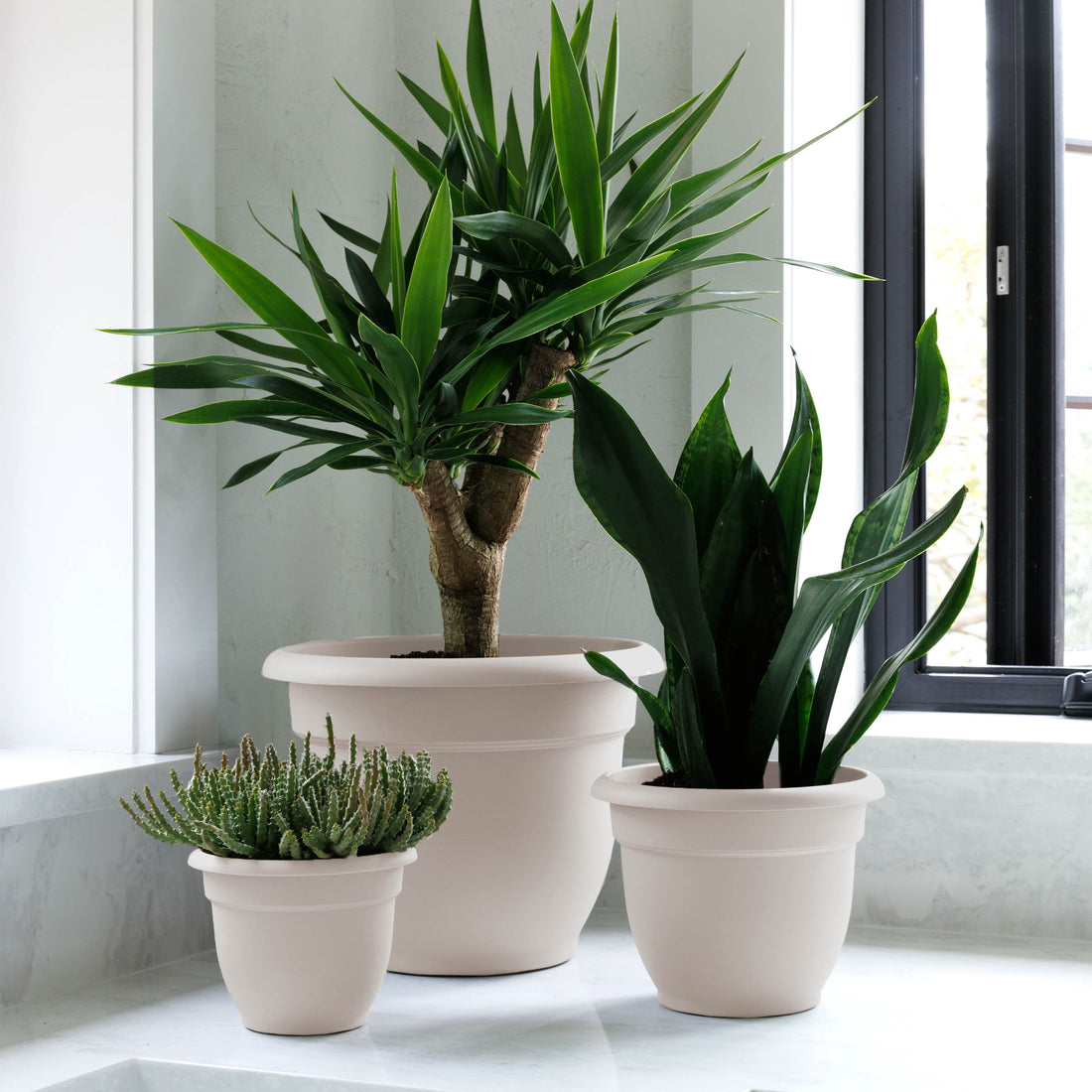 Bloem Ariana 6-inch Planter, Vanilla Bean | 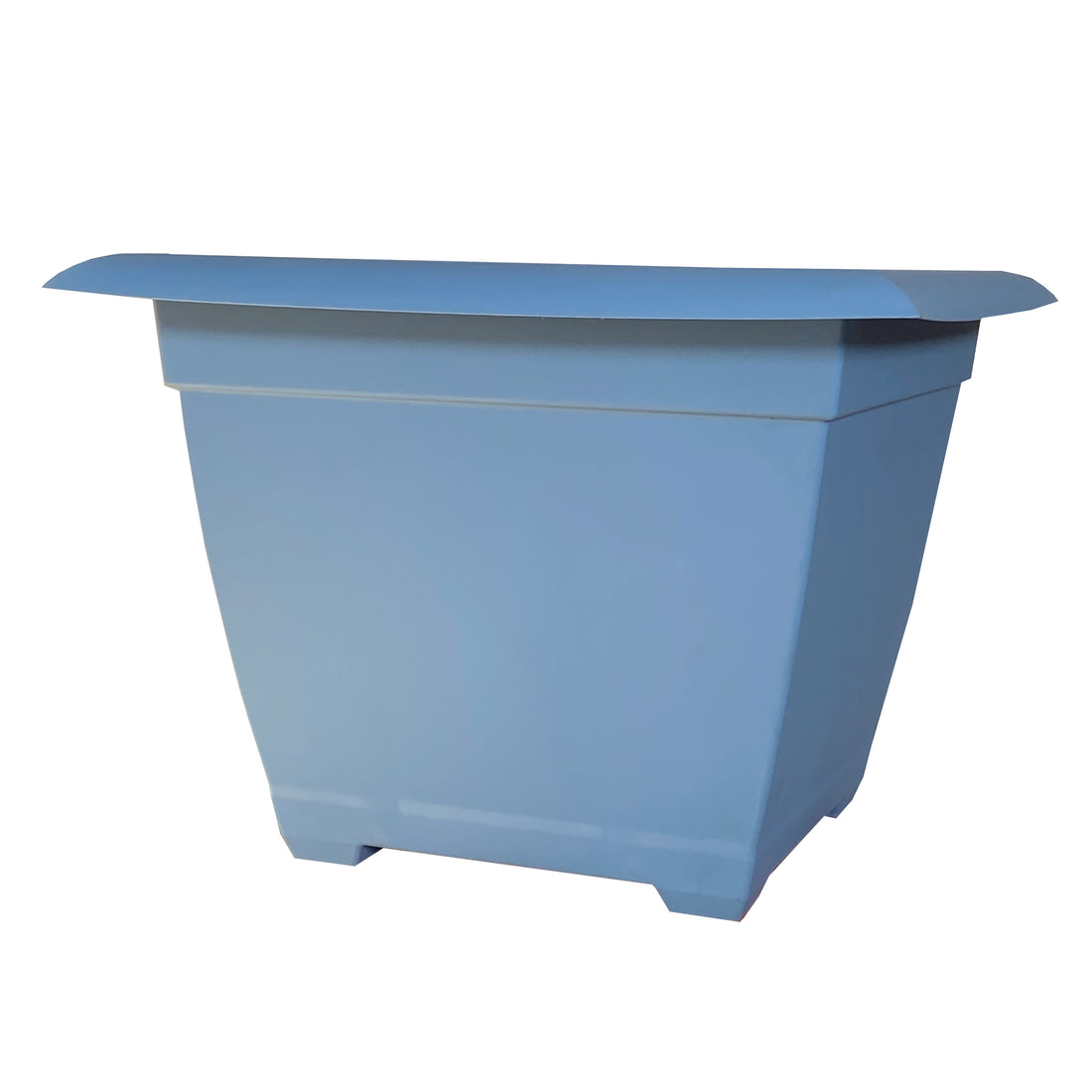 Bloem Dayton 15-inch Square Box, Ocean Blue | 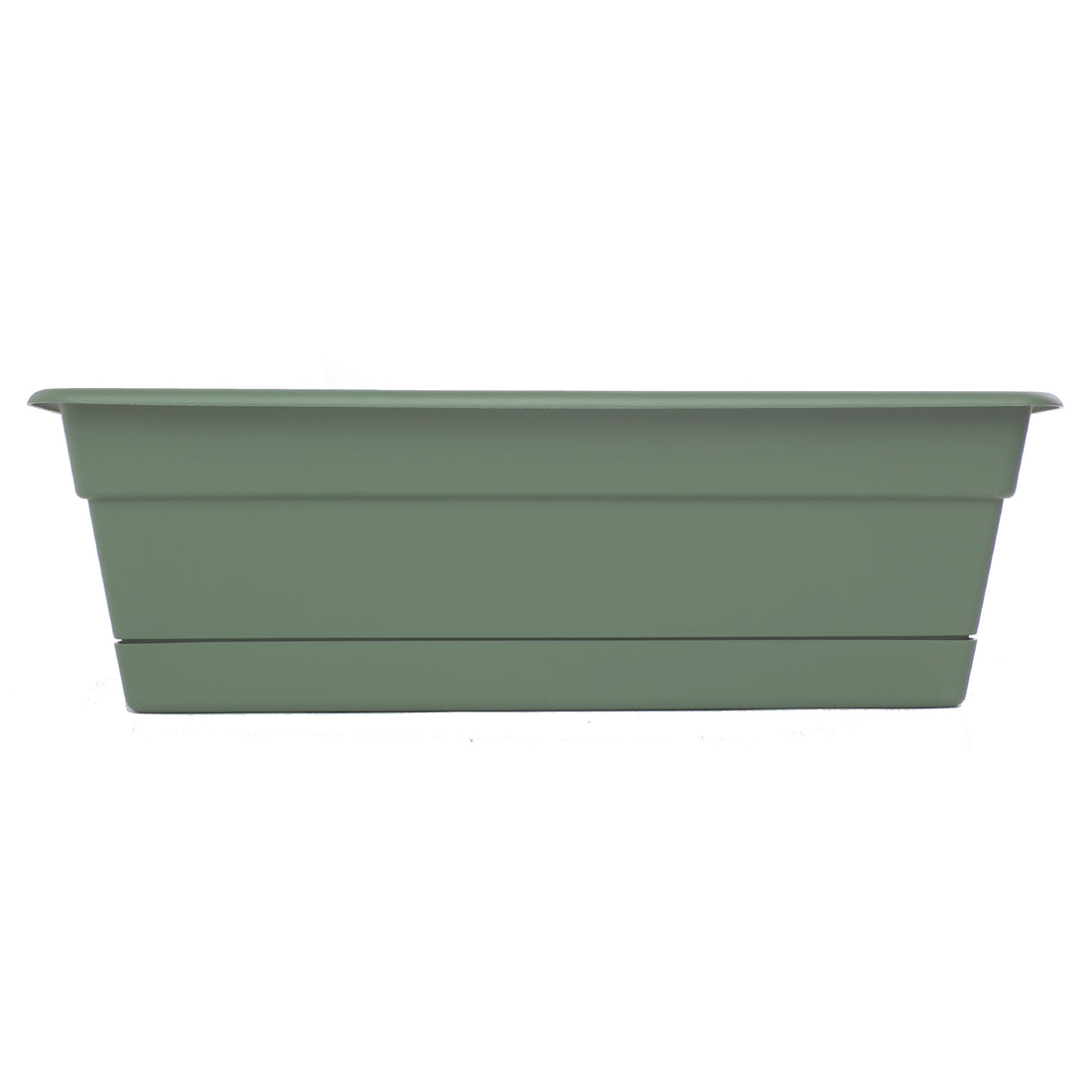 Bloem Dura Cotta 18-inch Window Box, Basil | 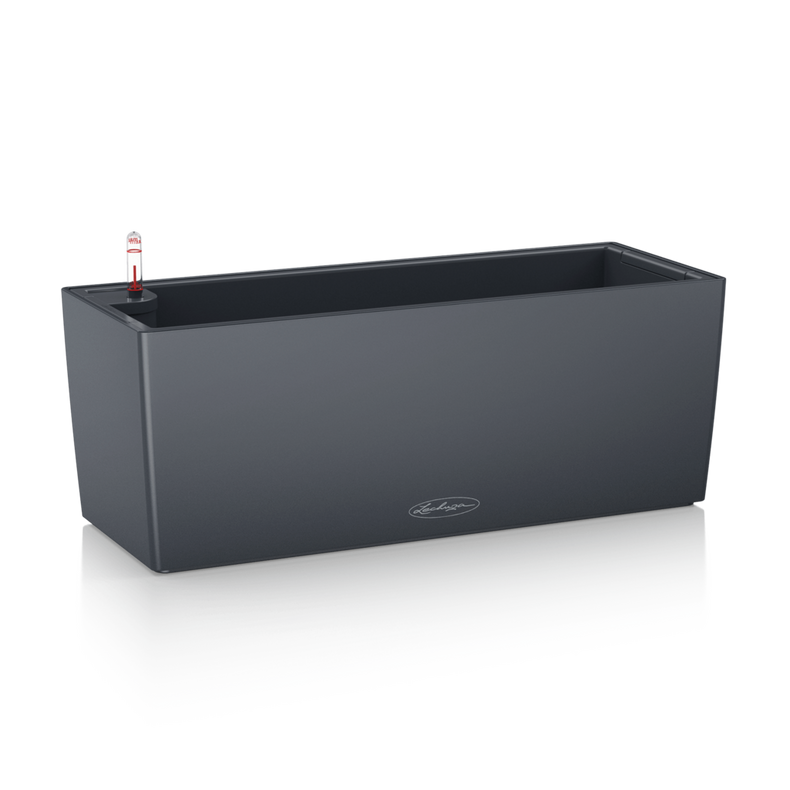 LECHUZA BALCONERA Color 50, Slate |
|---|---|---|---|---|
| Base arrangement | Sealed with optional knockouts | Sealed with optional knockouts | Drainage holes with a saucer | Reservoir with overflow screw |
| Before planting | Prepare outdoor drainage first | Check the base before filling the square box | Leave access to remove collected water | Follow the outdoor screw-removal instruction |
Write down where the next excess pour goes
For each candidate, finish this sentence: excess water goes into ___. That may be a saucer, a reservoir with a particular overflow arrangement, or nowhere until an optional knockout is opened. An answer that depends on an unbought accessory belongs on the shopping list.
Do this before filling the planter. A removable screw, a snap-in saucer and a knockout are not equivalent maintenance decisions. Once the planter is in place, leave a way to inspect its water-catching part rather than hiding it behind furniture or against the wall.
- Identify whether drainage is already open.
- Read the outdoor conversion instructions for the exact model.
- Make access for checking and emptying collected water part of the layout.
- Bloem Ariana 6-inch Planter, Vanilla Bean
- Bloem Dayton 15-inch Square Box, Ocean Blue
- Bloem Dura Cotta 18-inch Window Box, Basil
Sources for these notes
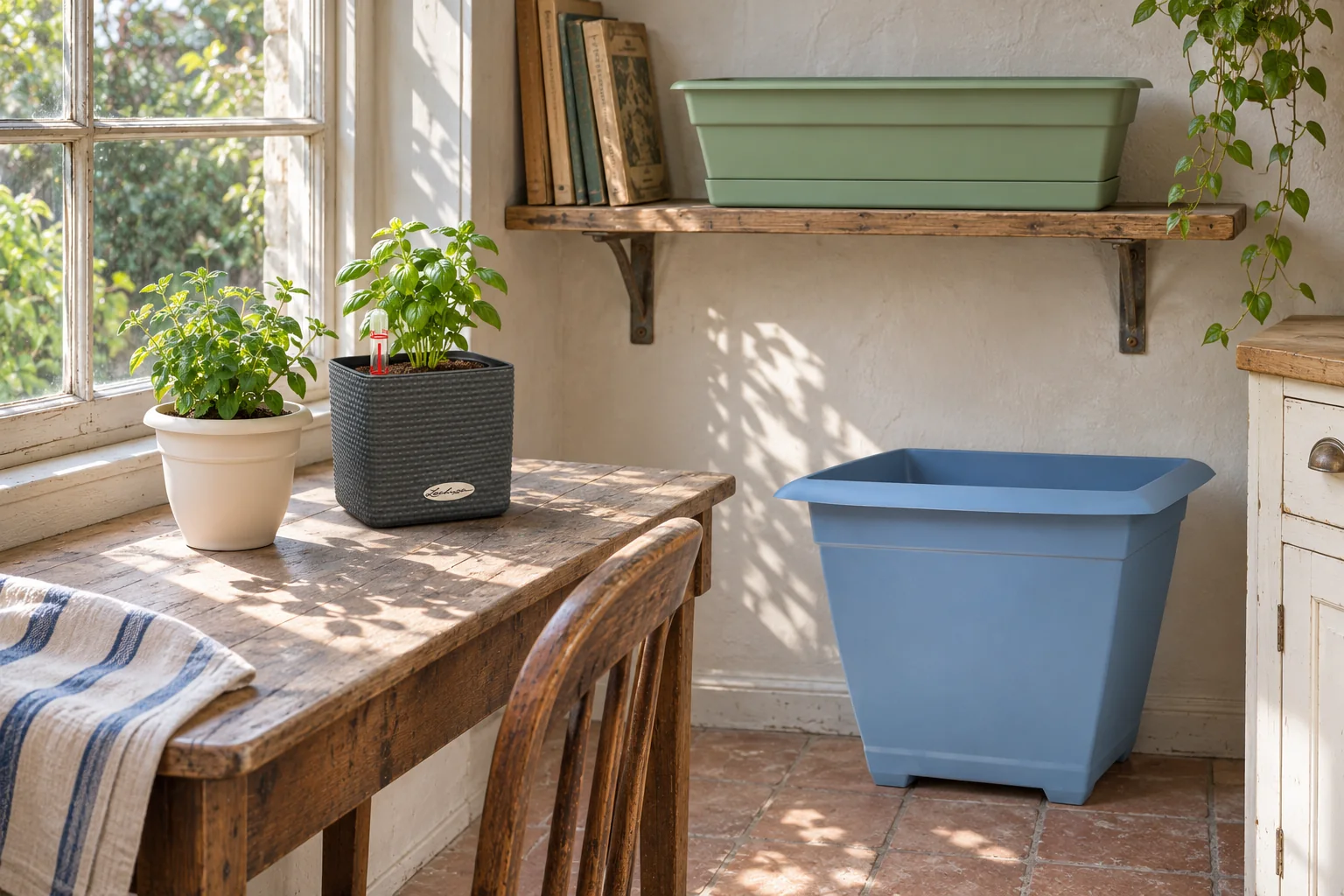
Decide where surplus water will go
A planter that is convenient indoors can need a different setup when it is exposed to rain. The important question is simple: after water enters, where can the excess leave, and what is directly underneath that exit?
That route might be a removable saucer, an outdoor surface, or a reservoir with an overflow. It should not come as a surprise after the planter is full and difficult to lift.
Make irreversible changes before filling
The Ariana and Dayton listings describe sealed bases with optional knockout holes. Read the exact instructions and decide on the intended location before adding planting mix. Preparing the base later is an awkward job with a full container.
A drainage knockout and a removable screw are not the same kind of adjustment. LECHUZA specifies removing the BALCONERA overflow screw for outdoor rain exposure. Do not transfer that instruction to another planter simply because both are described as self-watering.
A saucer needs room for attention
The Dura Cotta’s saucer is useful for collecting drainage, but a tight grouping of boxes can make it hard to reach. Leave enough access to inspect and empty it without dragging neighboring pots across the shelf.
For a balcony, consider where water leaving the planter will land. A product’s drainage feature does not settle questions about a surface, a downstairs neighbor, or the building’s rules. The useful purchase is the one whose water route fits the location.
Sources
- Bloem Ariana 6-inch Planter, Vanilla Bean — manufacturer specificationsChecked November 15, 2026
- Bloem Dayton 15-inch Square Box, Ocean Blue — manufacturer specificationsChecked November 15, 2026
- Bloem Dura Cotta 18-inch Window Box, Basil — manufacturer specificationsChecked November 15, 2026
- LECHUZA BALCONERA Color 50, Slate — manufacturer specificationsChecked November 15, 2026