
Window boxes for narrow ledges
An 18-inch box can still be too deep for the ledge. Compare three narrow planters by the space they occupy from front to back.
The useful differences
Scroll sideways to compare.
| Compare | 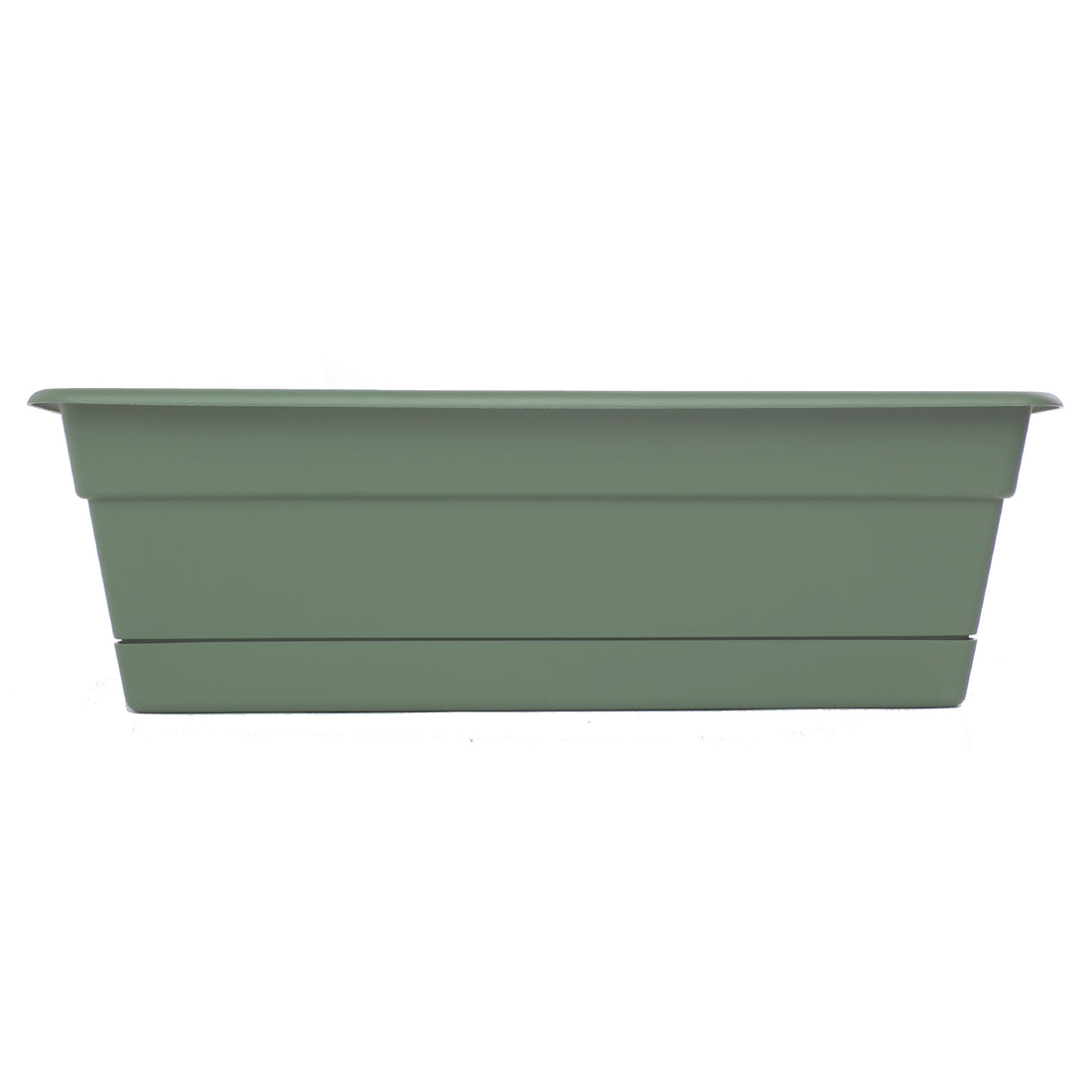 Bloem Dura Cotta 18-inch Window Box, Basil | 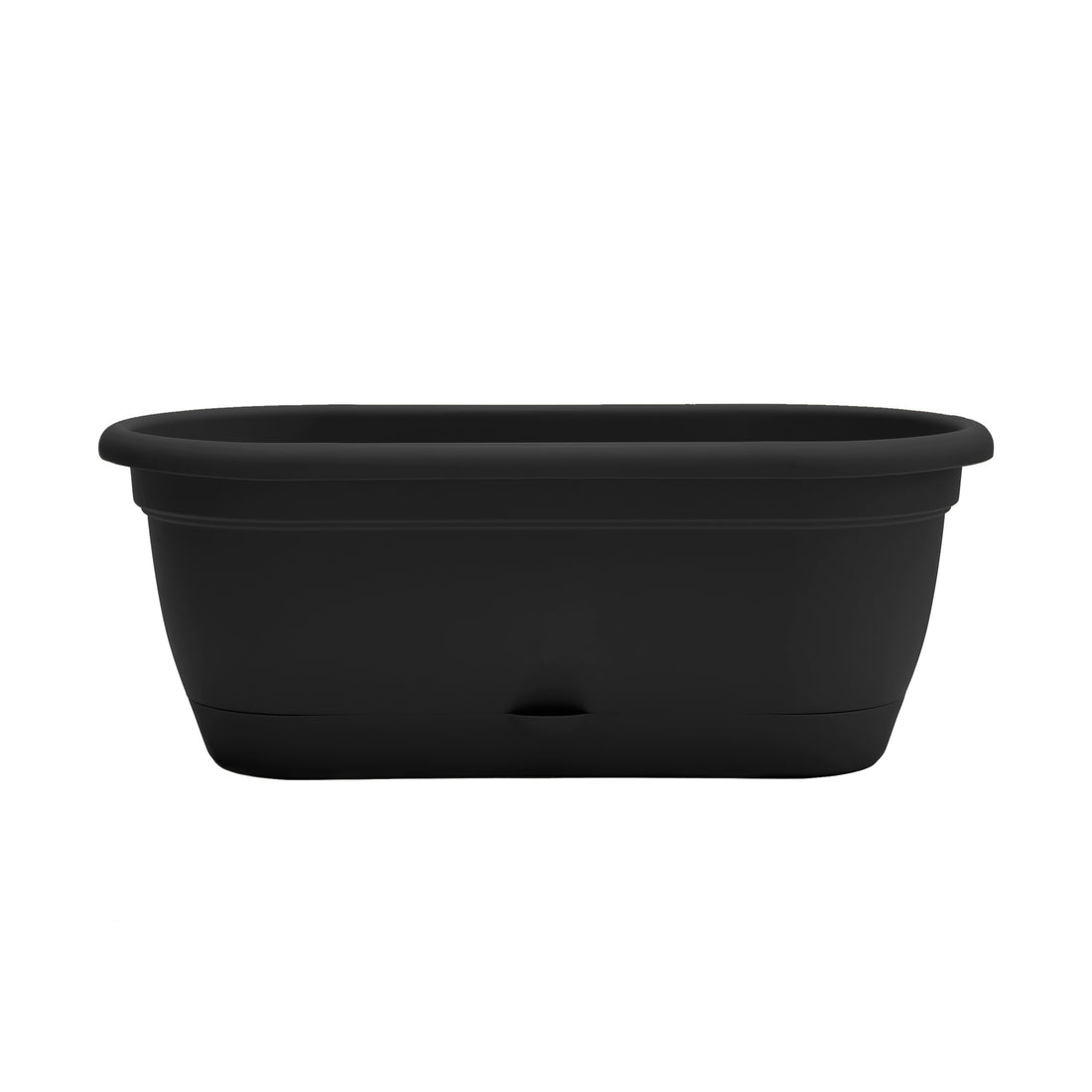 Bloem Lucca Window Box, Black | 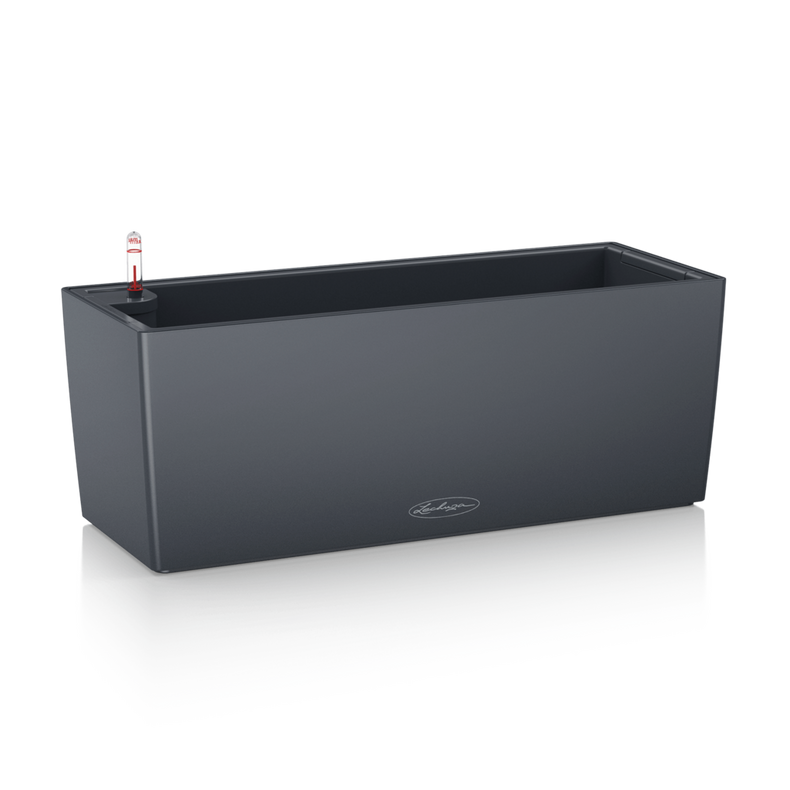 LECHUZA BALCONERA Color 50, Slate |
|---|---|---|---|
| Outer footprint | 18 × 7.5 in | 19 × 9.25 in | 50 × 19 cm (about 19.69 × 7.48 in) |
| Height | 5.75 in | 7.5 in | 19 cm (about 7.48 in) |
| Useful distinction | Separate drainage saucer | Self-watering tray | Removable planting liner |
Try the footprint before filling the shelf
A strip of paper cut to the outer footprint can settle a narrow-ledge question before an order arrives. Mark the back wall, front edge, window handle and any curtain path. Leave the paper there while opening the window and reaching for the neighboring pot.
Then make a second note for support at the base. A tapered box can have a rim that overhangs its supported bottom. That does not tell you whether a particular ledge is suitable, but it helps you ask the right measurement question instead of assuming the nominal length describes every part of the box.
- Check front-to-back depth before comparing soil capacity.
- Include the saucer or tray in the footprint.
- Keep a way to inspect the space below the planter.
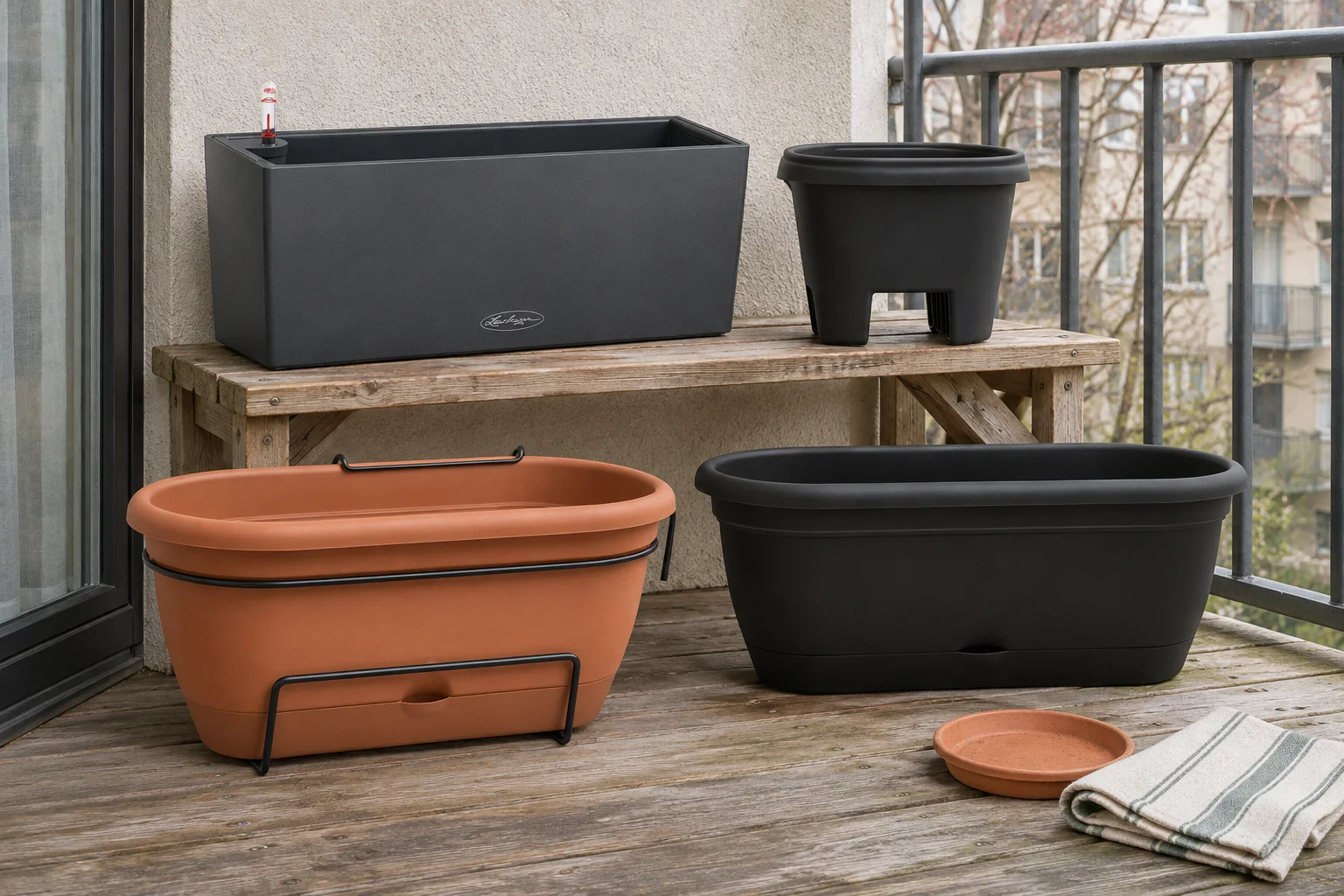
Measure the ledge where the box will sit
Length is usually prominent in the product name. Depth is what decides whether a window box can sit fully supported without projecting into a walkway or interfering with a window. Measure the usable flat surface, leaving out a rounded edge, a projecting latch, or a sloping sill.
A 19-inch planter on an 18-inch ledge has an obvious problem. A deeper planter on a seemingly wide window ledge can be easier to miss, especially when the sill narrows near the frame.
Three shapes, three compromises
The Dura Cotta is the lowest of these three boxes. Its saucer is separate from the planting area, so access for emptying it belongs in the layout. The Lucca is deeper front to back and has a watering tray. Choosing it means giving up some ledge room for that arrangement.
The BALCONERA has a narrower profile than the Lucca and a lift-out liner. That liner is useful only if you have room above and around the box to remove it. A low shelf or inward-opening window can make that awkward.
Draw the footprint before ordering
Cut or fold paper to the outer length and depth, then put it on the ledge. Open the window and walk past it. The exercise catches an obstruction that a single tape measurement can miss.
Treat the paper as a plan-view check only. It does not prove that the sill can support a filled planter, that the bottom is flat, or that a rail bracket will fit. Those are separate checks, especially outdoors.
Sources
- Bloem Dura Cotta 18-inch Window Box, Basil — manufacturer specificationsChecked November 15, 2026
- Bloem Lucca Window Box, Black — manufacturer specificationsChecked November 15, 2026
- LECHUZA BALCONERA Color 50, Slate — manufacturer specificationsChecked November 15, 2026