
Small planters for tight corners
A small nursery-pot holder, a round reservoir pot, and a larger square planter solve different space problems. Choose the planting scale before the shape.
The useful differences
Scroll sideways to compare.
| Compare | 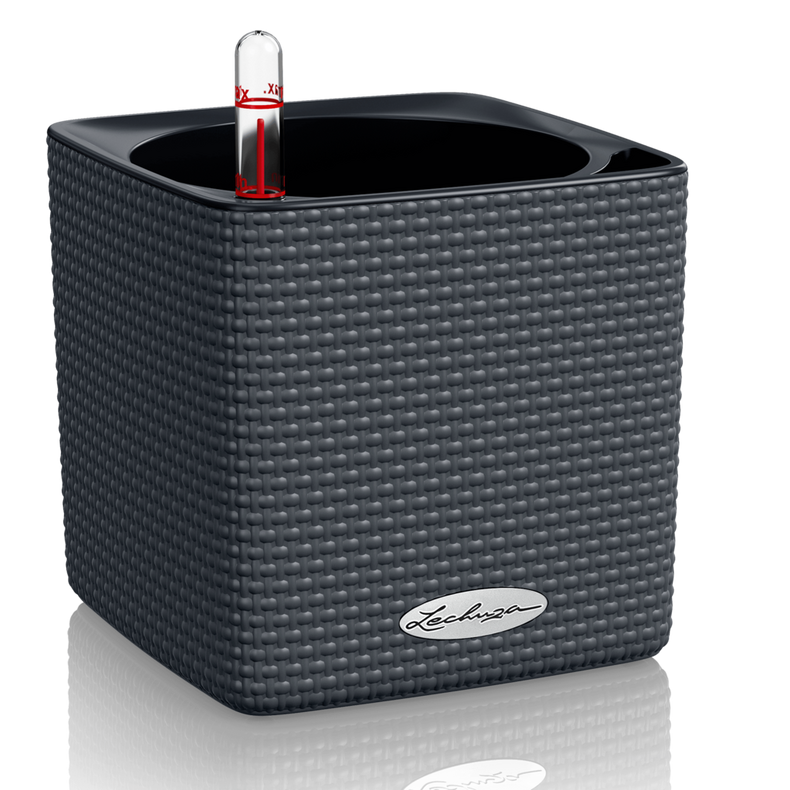 LECHUZA CUBE Color 14, Slate | 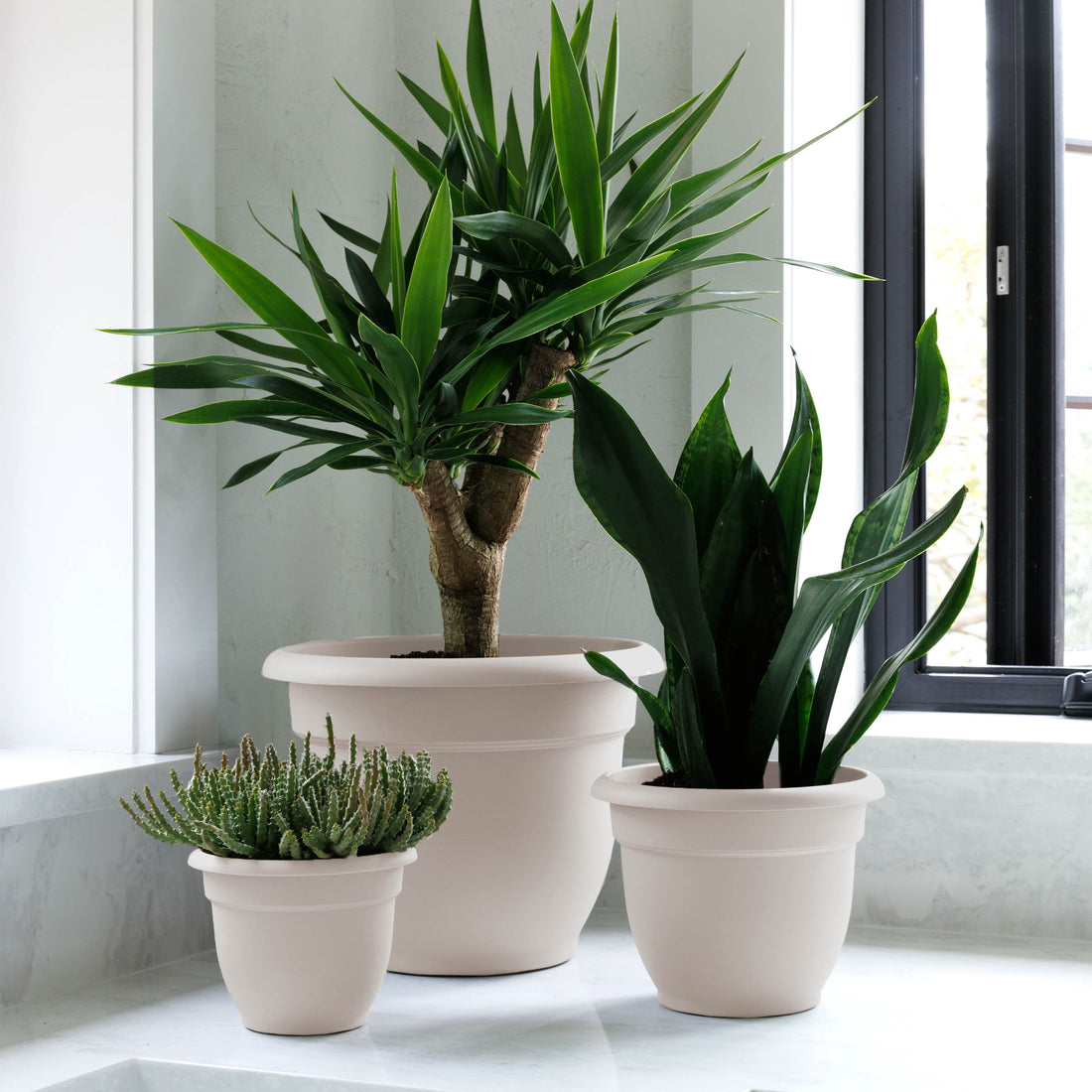 Bloem Ariana 6-inch Planter, Vanilla Bean | 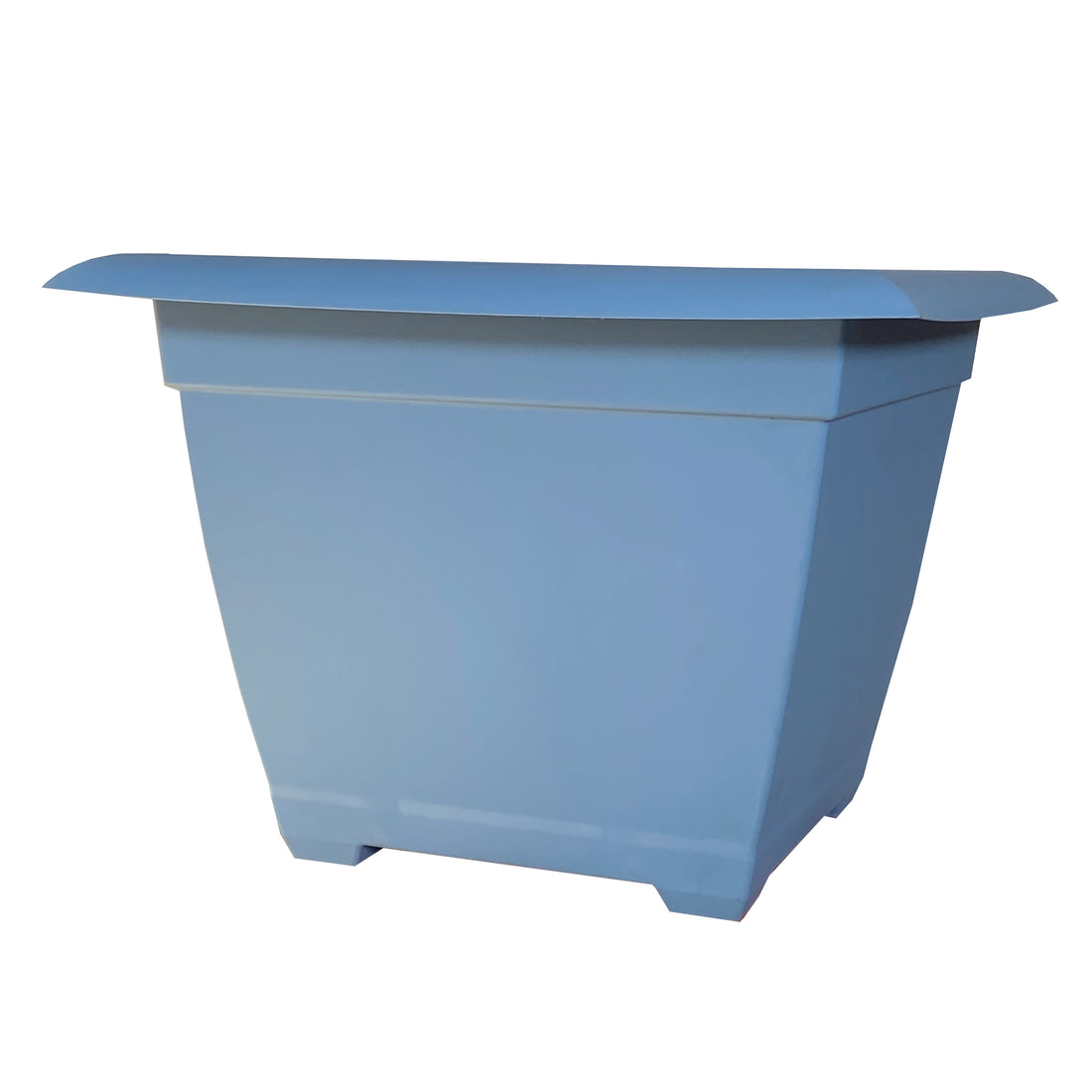 Bloem Dayton 15-inch Square Box, Ocean Blue |
|---|---|---|---|
| Format | Square nursery-pot holder | Round directly planted pot | Square directly planted box |
| Planting scale | 10–12 cm grow pot | About 2 US quarts of soil | About 4.5 US gallons of soil |
| Space question | Can the existing nursery pot fit? | Is a small round footprint preferable? | Is there floor space for a 14.75-inch square? |
Give the empty corner a daily-use test
Leave a paper footprint where the pot would sit for a day of normal movement. Open the nearby door, pull out the chair and carry a watering can past it. The point is to find the inconvenient reach before the corner contains a heavy planted container.
Choose the planting scale next. The small Ariana and CUBE are not miniature versions of the larger Dayton in every respect: their planting and watering arrangements differ. Decide whether you need a grow-pot holder, a directly planted small pot or the larger soil volume, then narrow the shape.
- Test the carrying route as well as the final spot.
- Keep access to the water indicator or lower tray.
- Compare actual rim measurements rather than judging size from a family photograph.
A corner is not automatically spare space
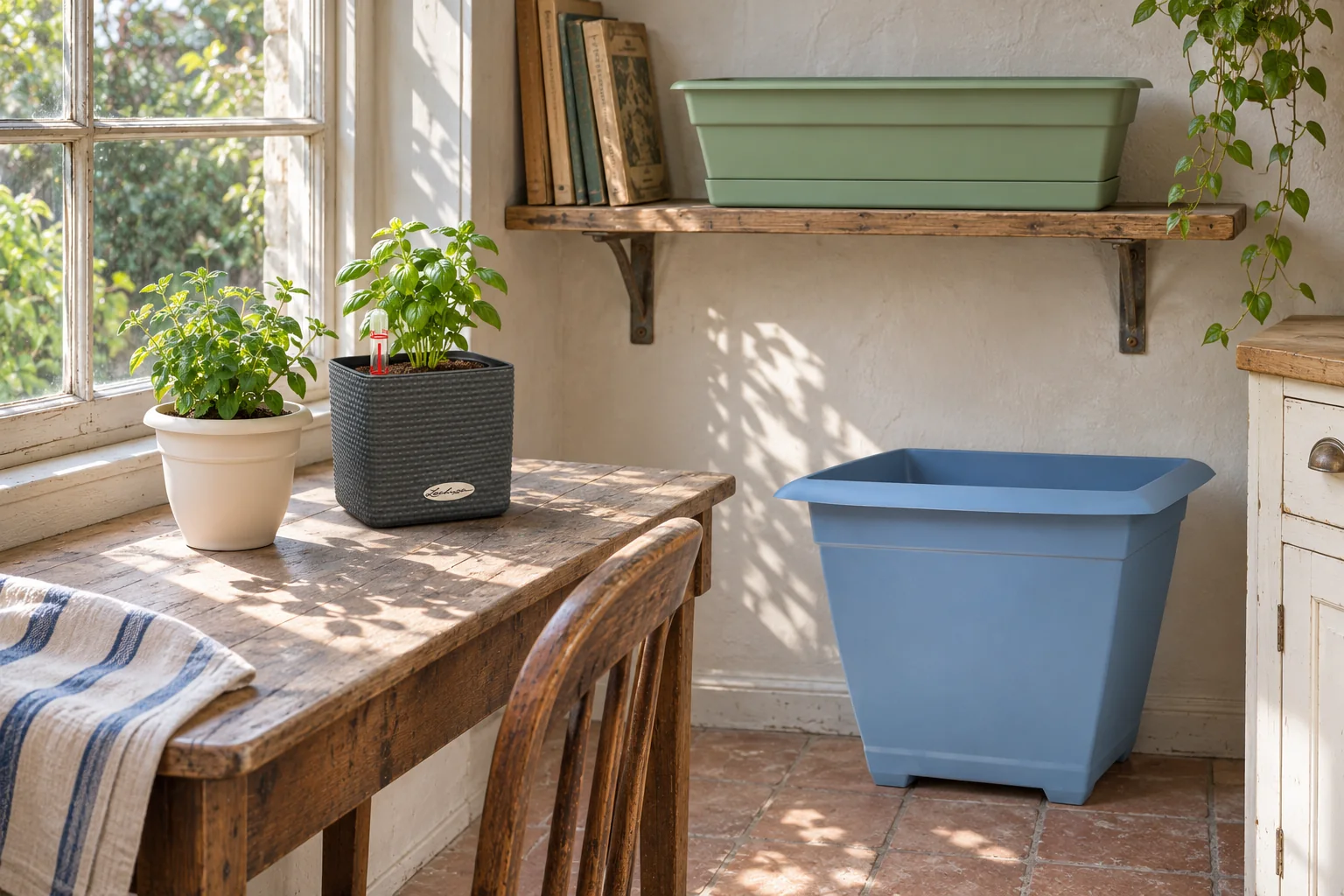
Check what happens around the proposed position: a door swings, a chair slides back, and someone needs to reach the window. A square container can make the plan look neat while still occupying space your feet or furniture use.
Start with the plant and container scale you actually need. The Dayton is a much larger planting container than the CUBE. The comparison is about choosing the right job, not deciding which shape is universally better.
Keep the carrying route in mind
A small pot can usually be lifted individually. A larger filled planter asks for a different route to a sink, balcony, or potting surface. Measure the narrowest opening on that route before committing to a permanent-looking corner arrangement.
The CUBE keeps a nursery pot separate from its outer container. The Ariana holds planting mix directly, while the Dayton has a larger square rim. Those arrangements change what you can remove without moving the whole outer pot.
Do not use rim size as root-space volume
A flared rim overstates the flat base below it, and a reservoir occupies some space that would otherwise be planting area. The listed soil capacity or specified grow-pot fit is more useful than multiplying outer length, width, and height.
Use the outer measurements to reserve space in the room. Use the manufacturer’s planting specification for the contents. Keeping those two decisions separate prevents a surprisingly common wrong-size purchase.
Sources
- LECHUZA CUBE Color 14, Slate — manufacturer specificationsChecked November 15, 2026
- Bloem Ariana 6-inch Planter, Vanilla Bean — manufacturer specificationsChecked November 15, 2026
- Bloem Dayton 15-inch Square Box, Ocean Blue — manufacturer specificationsChecked November 15, 2026