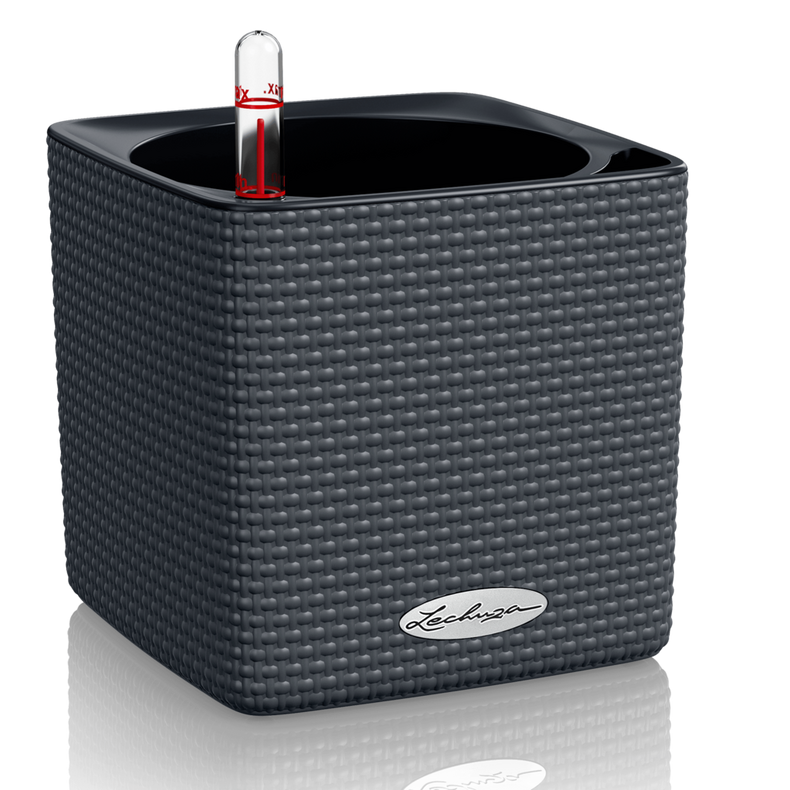
Pots & planters 3 products
Small self-watering planters compared
Three ways to hold water below a plant: an internal disk, a nursery-pot wick, and an accessible tray. Start with how you want to plant.
Read the notes
Container gardening in small spaces.
Posts filed under
Rim size, root space, reservoirs, and rail fittings: the details that decide where a planter belongs.
For a sill or floor corner, begin with the footprint and access around it. For a rail, begin with the exact attachment and rail profile. Soil volume comes after those placement checks; it does not tell you whether a rim, bracket or base fits.
Then trace surplus water through the proposed setup. Open drainage holes, an optional knockout and an overflow screw lead to different choices. Keep the saucer, tray or reservoir accessible after planting.
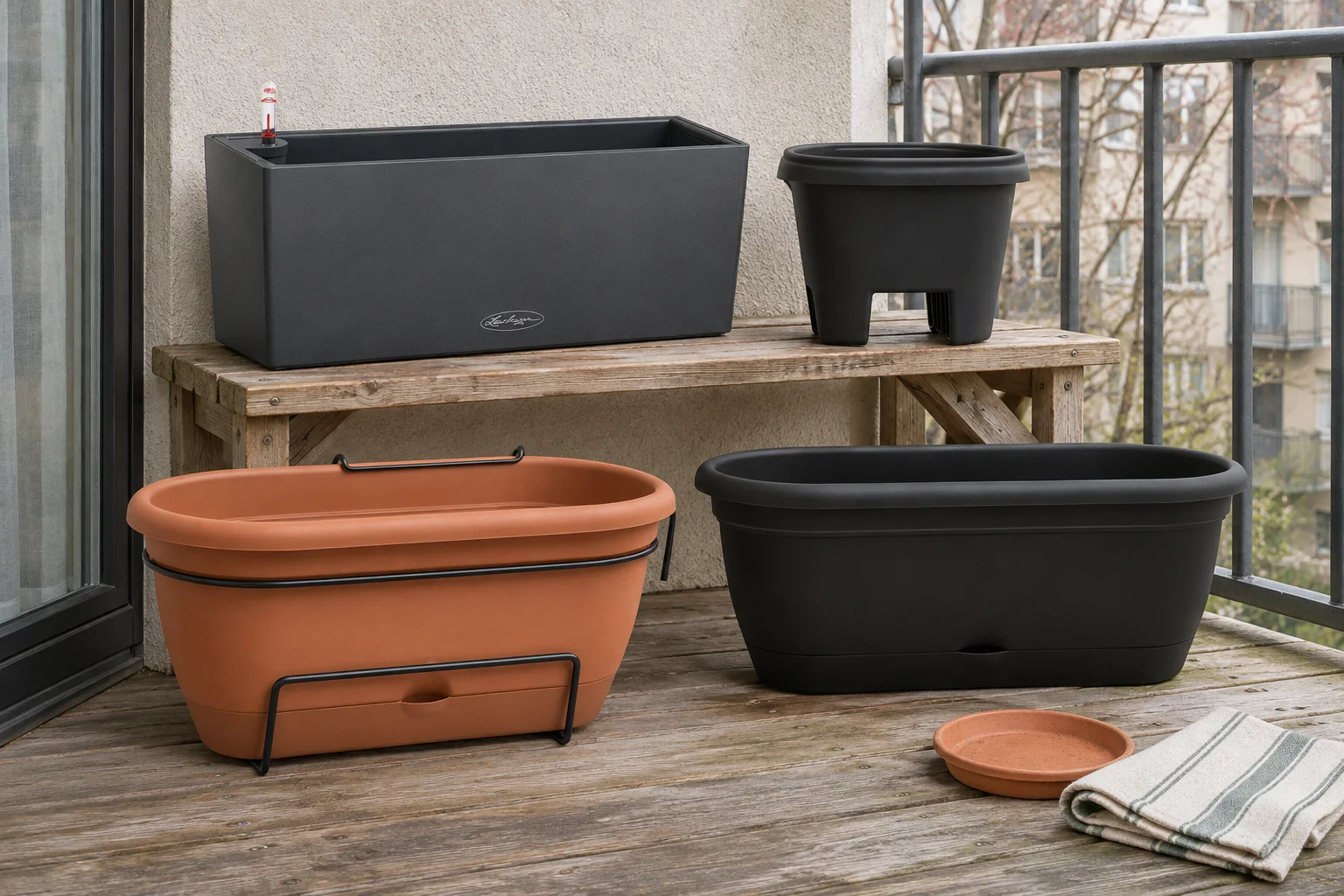
Pots & planters 3 products
Three ways to hold water below a plant: an internal disk, a nursery-pot wick, and an accessible tray. Start with how you want to plant.
Read the notes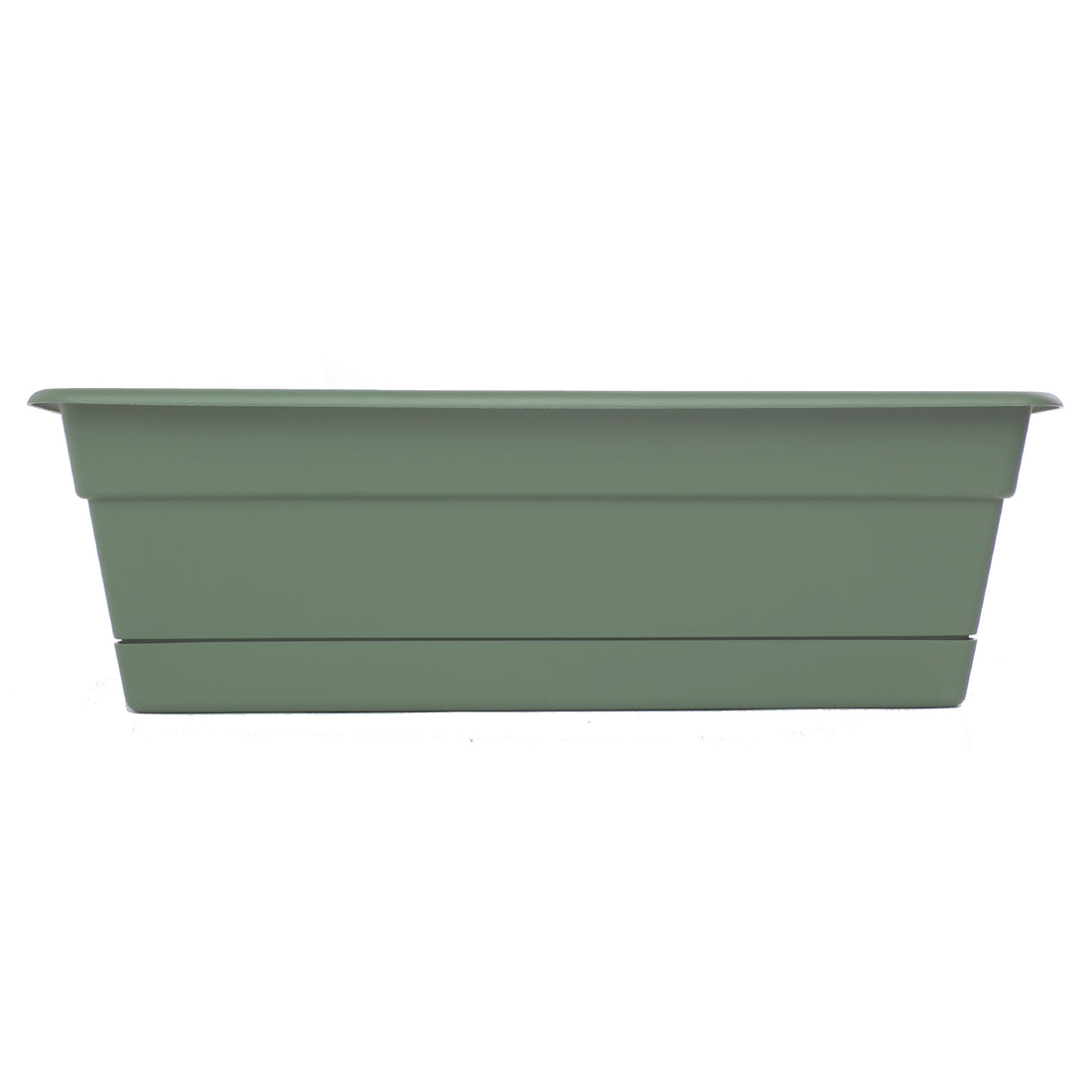
Pots & planters 3 products
An 18-inch box can still be too deep for the ledge. Compare three narrow planters by the space they occupy from front to back.
Read the notes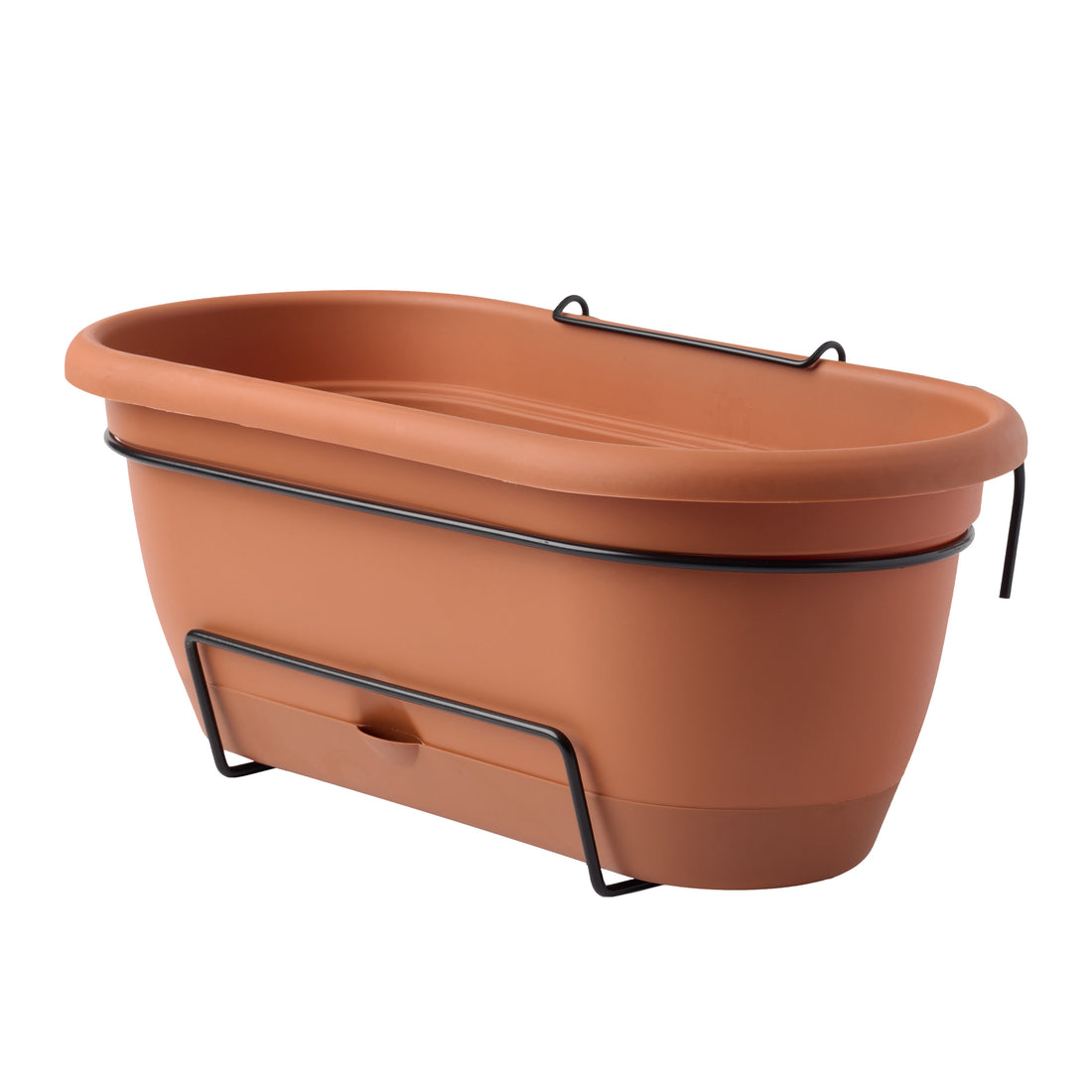
Pots & planters 3 products
Lucca, Classic Deck Rail, and BALCONERA use different measurements to describe attachment. Match the fitting to the rail before choosing the planter.
Read the notes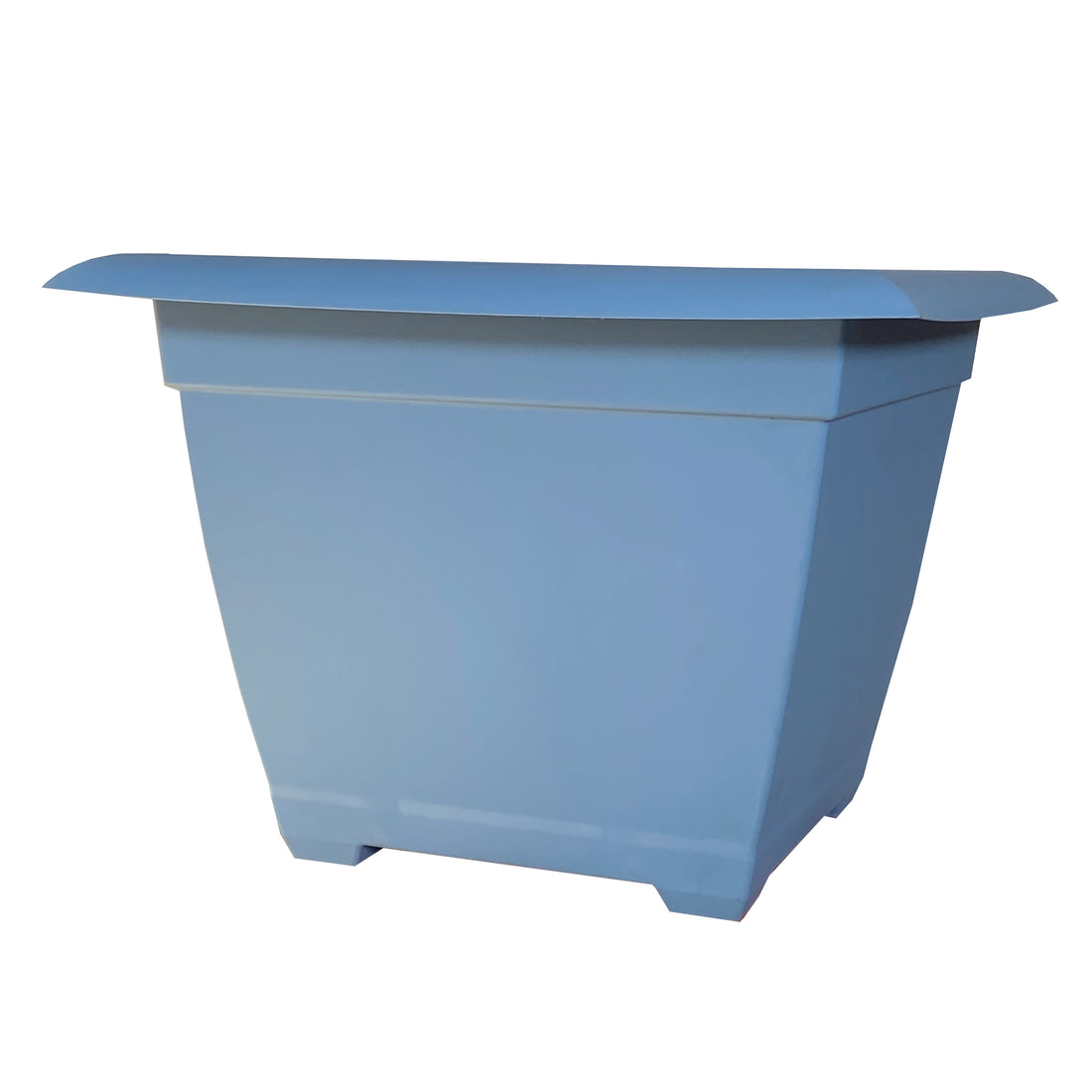
Pots & planters 3 products
A small nursery-pot holder, a round reservoir pot, and a larger square planter solve different space problems. Choose the planting scale before the shape.
Read the notes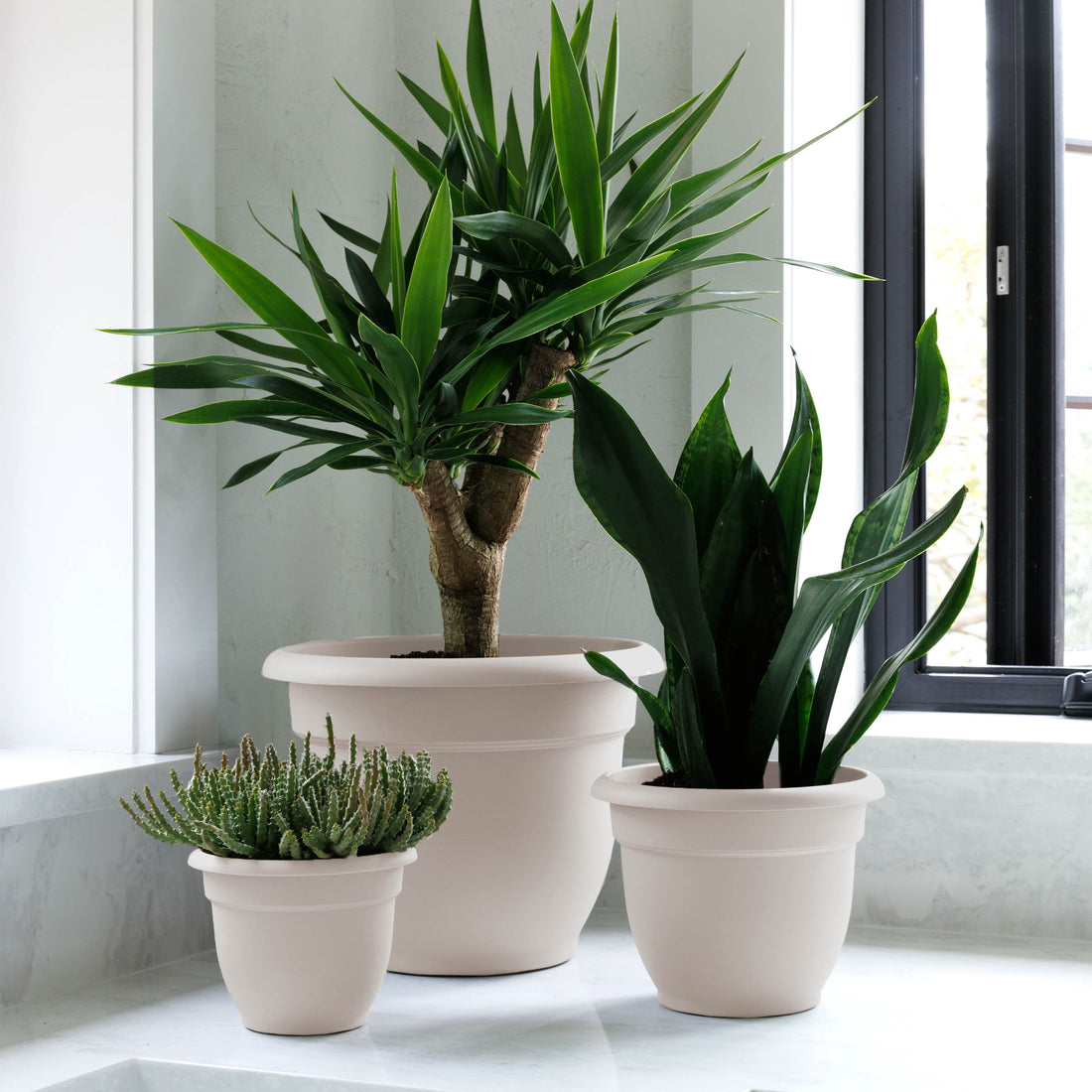
Pots & planters 4 products
Sealed knockouts, an open base and saucer, or a removable overflow screw: these are different drainage arrangements, even when the pots look similar.
Read the notes