
1010 and 1020 seed tray dimensions
Actual outer rims and tray depth decide whether a seed-starting setup fits. Compare a half-size tray with deep and shallow full-size options.
The useful differences
Scroll sideways to compare.
| Compare | 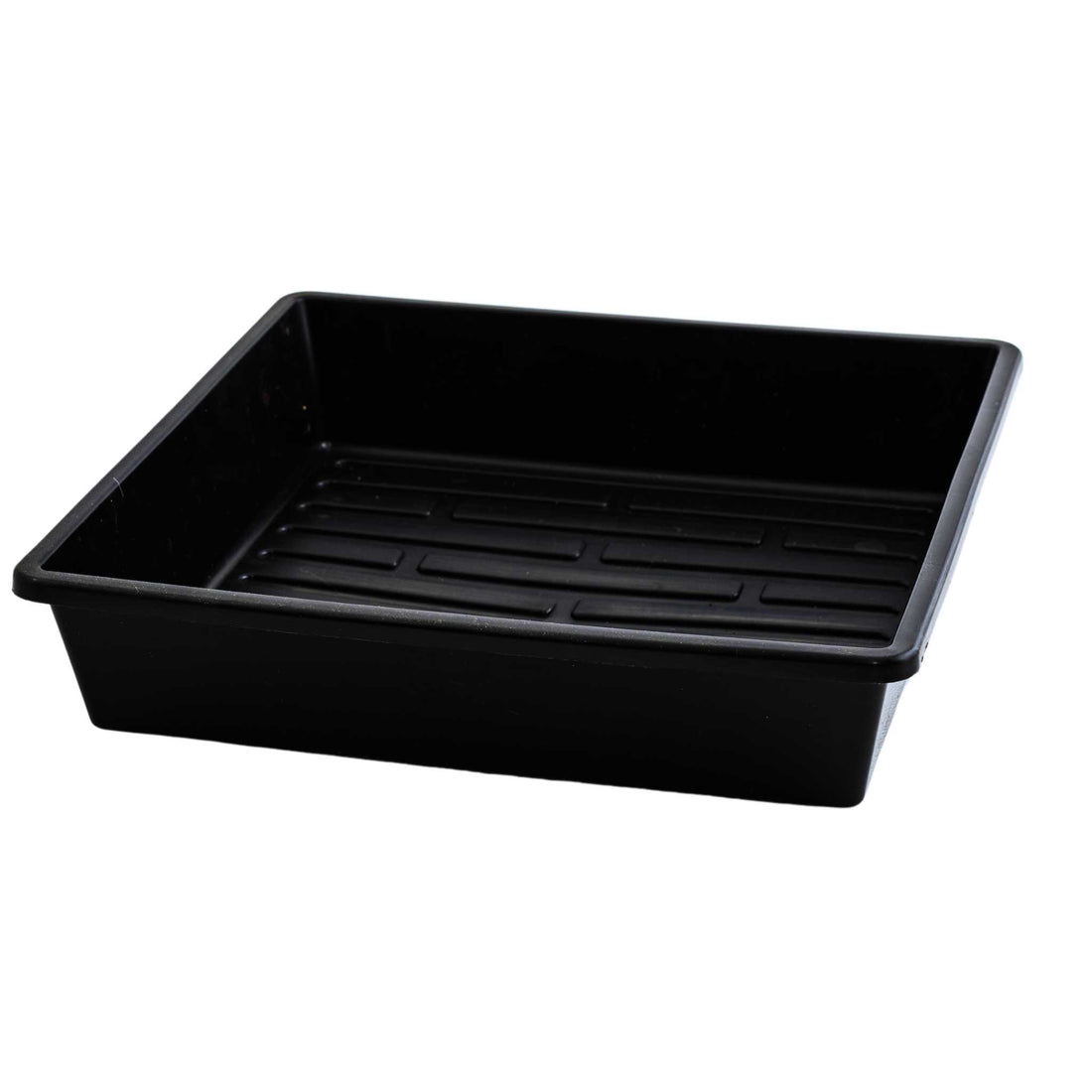 Bootstrap Farmer 1010 Deep Tray, Black / No Holes | 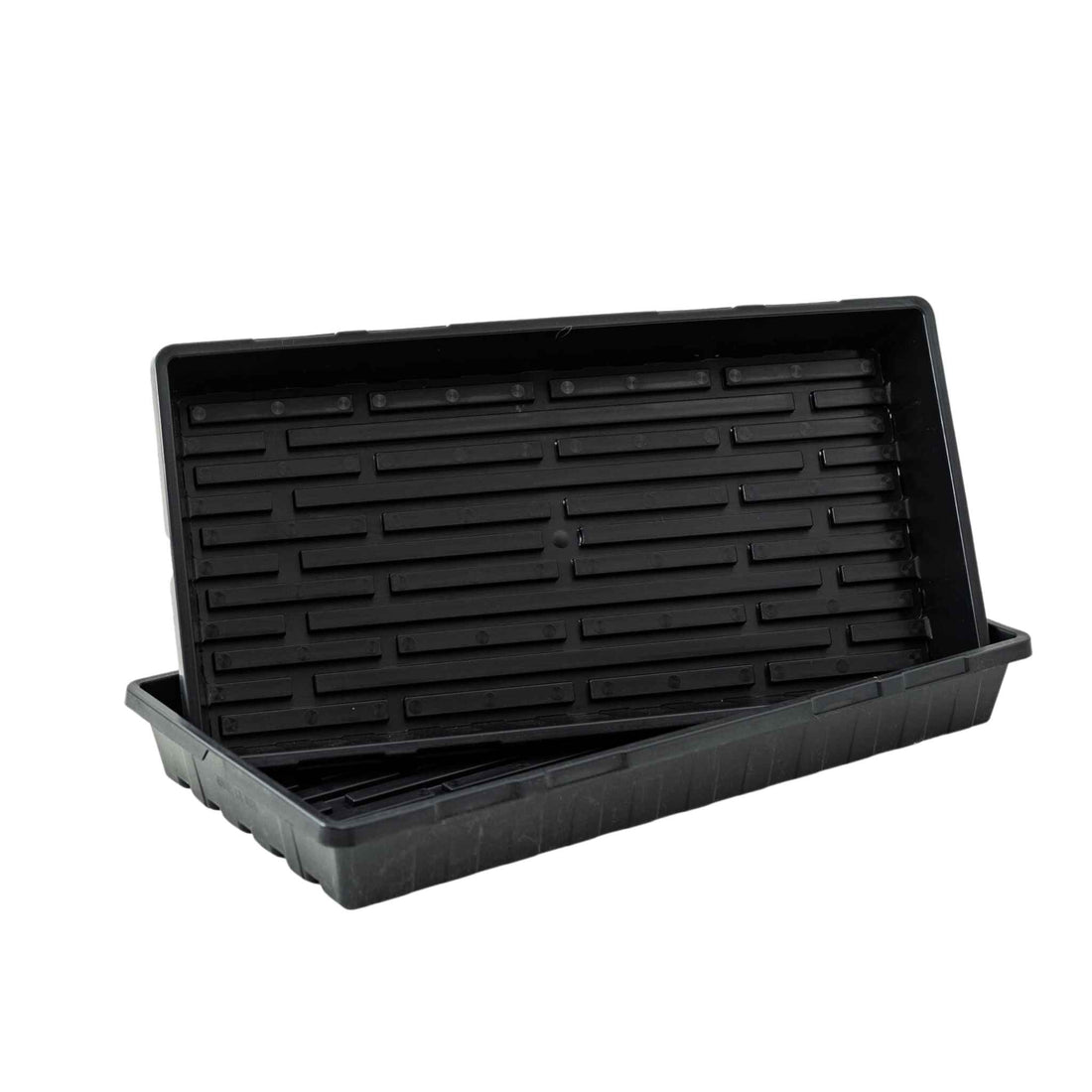 Bootstrap Farmer 1020 Deep Tray, Black / No Holes | 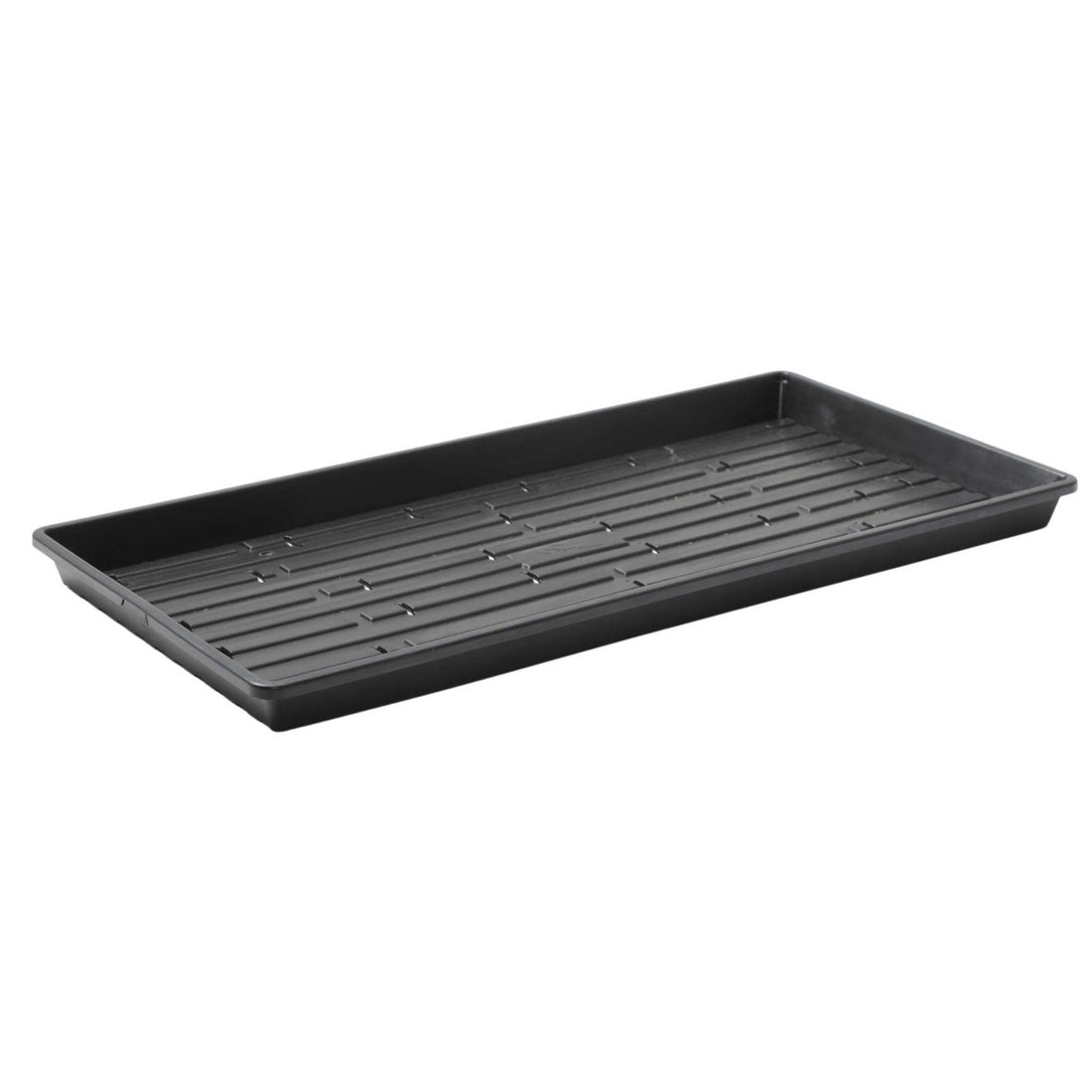 Bootstrap Farmer 1020 Shallow Tray, Black / With Holes |
|---|---|---|---|
| Published outer size | 10.635 × 10.385 × 2.5 in | 21.1 × 11 × 2.5 in | 21 × 10.75 × 1.25 in |
| Selected base | No holes | No holes | 36 drainage holes |
| Space implication | Small batch with a water-catching base | Full-size base for inserts or loose pots | Lower walls; needs water management underneath |
Draw the shelf as a usable rectangle
Measure between the things that actually stop a tray: shelf uprights, lips, brackets and the wall. Record the clear front-to-back depth, then leave enough hand space to lift a tray without dragging it past a neighboring setup.
Choose the base by water handling before choosing the cell count. The no-hole trays catch water; the shallow tray listed here has holes and needs an appropriate arrangement below. Once the base is settled, compare the inside bottom with the documented inserts and leave height for the whole stack.
- Use actual outer dimensions for shelf space.
- Use inside-bottom dimensions for pots and inserts.
- Reserve vertical room for lifting a tray or removing a cover.
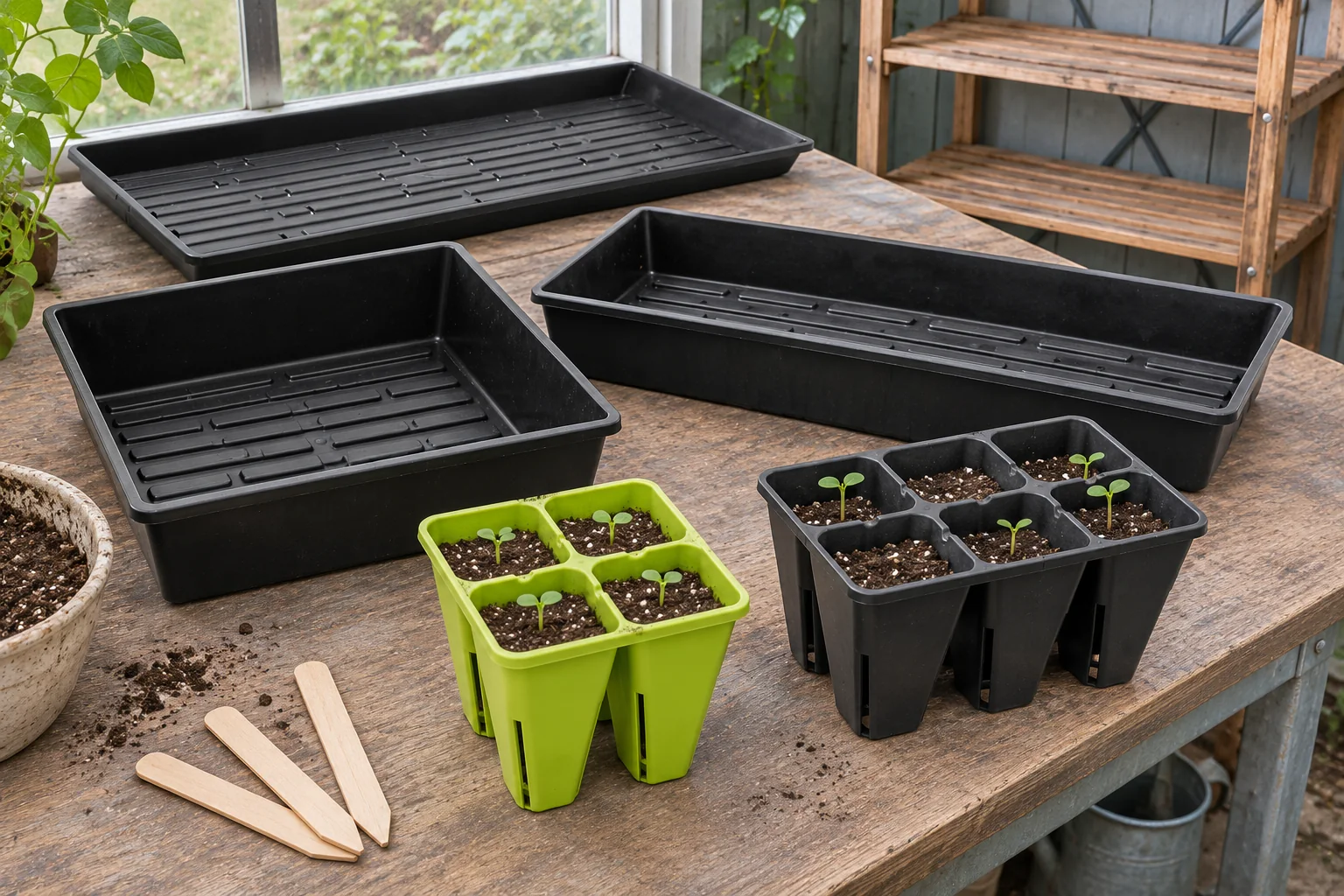
Treat 1010 and 1020 as system names
The numbers are useful shorthand, not a promise of exact outside measurements. A shelf sold as ten inches deep may not support the full rim of any tray in this table. Start with the actual rim dimensions, then add room to grasp and move the tray.
Check the usable shelf between posts as well as the shelf board itself. A tray can fit the depth and still be blocked by an upright at the front corner.
Keep water-catching and draining trays distinct
The selected deep trays have solid bases. The selected shallow tray has holes. They are different parts of a watering arrangement, even if the photographs look much alike. A draining tray over a wooden shelf needs a suitable way to catch its runoff.
Bootstrap Farmer recommends matching tray depth when nesting. The shallow model’s lower walls are not a reason to assume it will pair neatly with the deep model. Choose the matching no-hole shallow tray if that is the system you want.
Check what fits inside separately
Outer dimensions reserve shelf space. The inside bottom decides whether loose pots can stand in the arrangement you want. A tapered wall can defeat a neat drawing based on the outer rectangle.
The manufacturer confirms that two of its 1010 trays fit a 1020 tray, but warns that four 5×5 trays do not fit the 1010. That is why a stated compatibility is more useful than dividing the product names. Keep the exact tray family and depth in the shopping list.
Sources
- Bootstrap Farmer 1010 Deep Tray, Black / No Holes — manufacturer specificationsChecked November 15, 2026
- Bootstrap Farmer 1020 Deep Tray, Black / No Holes — manufacturer specificationsChecked November 15, 2026
- Bootstrap Farmer 1020 Shallow Tray, Black / With Holes — manufacturer specificationsChecked November 15, 2026